Best Alternatives to Etsy for Artists
In this article
Etsy charges artists a 6.5% transaction fee, 3% + $0.25 payment processing, and $0.20 per listing. On a $35 art print, that totals roughly $3.65 – about 10.4% of revenue. Shops above $10,000 in trailing 12-month sales cannot opt out of the 12% Offsite Ads fee on referred sales.
For artists building a catalog of work to sell, that percentage compounds across every format and every price point.
Here is how the main alternatives compare.
| Platform | Fees | Built-in Traffic | Best For | Payout |
|---|---|---|---|---|
| Fine Art America | Markup model; artist keeps 100% of set markup | Yes (print buyers) | Fine art prints, framed prints, canvas wraps | Monthly |
| Society6 | 10% base artist commission | Yes (art + home decor buyers) | Surface patterns, home goods, lifestyle products | Monthly |
| Redbubble | Artist-set margin above base price (20% default) | Yes (casual shoppers) | Wearable designs, stickers, wall art | Monthly |
| ArtStation Marketplace | 70% to artist | Yes (game, film, VFX artists) | Digital brushes, textures, concept art assets | Monthly |
| Creative Market | ~55% to seller | Yes (design buyers) | Illustrations, patterns, fonts, design assets | Monthly |
| Saatchi Art | 65% to artist (35% commission) | Yes (art collectors) | Original art + fine art prints for collectors | 45 days post-delivery |
| Gumroad | 10% flat (includes payment processing) | None | Digital art files, brush packs, commission bundles | Weekly |
| Ko-fi | 5% free plan, 0% at $6/mo Gold | Small community | Commission requests + fan support | Instant |
Per each platform’s published pricing and seller terms as of 2026. Verify before listing – fee structures change.
Is Fine Art America the Best Print-on-Demand Alternative for Fine Artists?
Fine Art America is the largest print-on-demand art marketplace, with buyers actively searching for wall art, framed prints, and canvas wraps. Artists upload work, set a markup above the base print cost, and the platform handles manufacturing, shipping, and customer service. Per Fine Art America’s published artist FAQ, the artist’s markup goes entirely to the artist – Fine Art America earns from the manufacturing base cost, not a percentage of the markup.

Fine Art America (also available at Pixels.com, its sister domain for photographers) has built a catalog of millions of artwork images. The buyer base arrives specifically to purchase wall art and home decor, so search intent is strong and organic discovery is real.
What the platform handles for artists:
- Print-on-demand manufacturing across dozens of formats (framed prints, canvas wraps, metal prints, acrylic prints, posters, greeting cards, phone cases)
- Global shipping and returns
- Customer service for all order issues, including print quality replacements
- A searchable public profile with your full catalog
- Collection organization and group gallery participation
The markup model explained:
Suppose Fine Art America’s base cost for a 16x20 framed print is $85. You set your markup at $40. The buyer pays $125. Fine Art America keeps $85 for manufacturing and fulfillment; you keep $40. There is no percentage taken from your markup, per Fine Art America’s published artist FAQ. This model differs from most POD platforms, which either charge a commission percentage or lock artists into a fixed royalty rate.
Who it works well for:
Fine artists, photographers, and illustrators with high-resolution work suitable for large-format printing. Fine Art America’s buyer base searches for home decor and wall art – not digital downloads, brush packs, or surface pattern products for merchandise.
The discovery tradeoff:
Fine Art America’s organic search is real, but ranking in their internal search depends on catalog size and keyword-optimized titles and descriptions. Artists with a deep catalog of quality work tend to compound their discovery over time. A catalog of three or four pieces will see limited organic traffic at the start.
Does Society6 Work for Artists Who Want Royalties Without Active Marketing?
Society6 pays a base commission of 10% on most product types, per Society6’s published artist FAQ. Some product categories allow artists to set a custom percentage above that base. Society6 handles all manufacturing, fulfillment, and customer service. The platform’s buyer base skews toward art, home decor, and lifestyle products – discovery is organic and driven by Society6’s own marketing, not the artist’s own audience.
Society6 built its model around artists uploading surface pattern designs that the platform then prints across hundreds of product types automatically: throw pillows, wall tapestries, mugs, phone cases, art prints, duvet covers, and more. A single uploaded design populates dozens of products.
The commission rate – 10% base on most categories – is lower than most platforms in this comparison. On a $50 throw pillow, you earn roughly $5, per Society6’s published artist program. The value exchange is reach: Society6 has millions of buyers actively browsing for art and home goods, and artists earn from products they never need to market individually.
Who Society6 fits best:
Artists with surface pattern work, bold graphic design, and illustration styles that translate well to home goods and lifestyle products. Painterly fine art that relies on precise color reproduction can be inconsistent across Society6’s wide product range – testing with one design across categories before uploading a full catalog is the practical approach.
Who should look elsewhere:
Digital art sold as downloadable files does not work on Society6. The platform is exclusively print-on-demand and physical merchandise. If you are selling Procreate brushes, texture packs, design templates, or digital downloads of any kind, Society6 is not the right fit.
Is Redbubble the Right Etsy Alternative for Independent Artists?
Redbubble allows artists to set their own margin percentage above the base product cost, per Redbubble’s published artist pricing documentation. The default artist margin is 20% of the base product price per transaction. Artists can adjust this percentage from their account settings at any time. Redbubble has an active buyer community and a discovery system driven by platform search, trending sections, and social promotion.

Redbubble draws a younger, design-aware audience who look specifically for independent artist work – not generic stock designs. This contrasts with Amazon Merch, which skews more toward text-based and trend-chasing designs.
What the Redbubble discovery experience includes:
- Search by keyword, color, style, and subject
- Artist-specific shop pages that buyers can follow
- Trending design sections and seasonal promotions curated by the platform
- A community layer through artist profiles, followers, and likes
The margin adjustment tradeoff:
Redbubble’s model lets artists raise margins above the default 20% at the cost of pricing above the marketplace average. The practical approach is to test pricing on comparable designs: at the default margin, you earn 20% of the base cost. At 30%, the product price rises and margin per sale increases. Redbubble’s algorithm does not penalize higher-margin listings in search, but buyer price sensitivity varies by product category.
Redbubble vs. Society6:
Both platforms use the POD marketplace model, but audiences differ. Redbubble’s buyer base skews toward individual design purchases (a sticker, a t-shirt). Society6’s buyer base skews toward home furnishing purchases (throw pillows, bedding). Artists with bold, graphic designs and typography often perform better on Redbubble. Artists with cohesive surface pattern work tend to find stronger fit on Society6. Neither platform requires exclusivity, so running both simultaneously on the same designs adds revenue with no additional listing cost.
Does ArtStation Marketplace Serve Professional Digital Artists?
ArtStation Marketplace offers a 70% revenue share to creators on digital asset sales, per ArtStation’s published Marketplace documentation. The platform serves professional game artists, concept artists, illustrators, and VFX artists who buy and sell digital brushes, texture packs, reference packs, tutorials, and asset libraries. ArtStation’s built-in buyer base is specifically this professional creative audience – artists do not need to drive their own traffic.
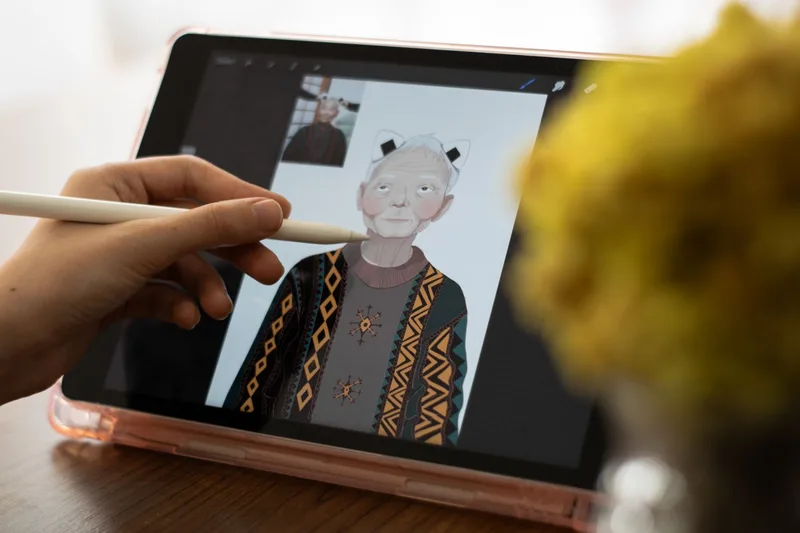
ArtStation Marketplace is a niche platform with a precise audience. Buyers are working professionals in game, film, and animation – or students training for those careers. They search for tools that make their work faster: Procreate brush packs, Photoshop actions, 3D asset libraries, concept art tutorial videos, and professional reference packs.
Products that sell well on ArtStation Marketplace:
- Procreate and Photoshop brush packs
- Texture and material libraries for 3D rendering
- Concept art video tutorials and PDF guides
- Lighting and rendering reference collections
- Stock illustrations and design asset bundles for commercial use
Products that are a poor fit:
- Fine art prints and POD merchandise (the platform serves creative professionals, not home decor buyers)
- Hobby-level designs without professional production quality
- General printables and digital downloads not aimed at creative industry professionals
The 70% revenue share is among the highest in the marketplace space – comparable to direct-selling platforms like Gumroad, but with ArtStation’s established buyer traffic included.
ArtStation’s quality bar is high. Listings without professional presentation, clear product previews, and well-organized file structures underperform. Artists who invest in quality preview images and detailed product descriptions see significantly better conversion than those who upload a zip file with a one-line description.
Which Etsy Alternative Should Artists Actually Use?
The right Etsy alternative depends on what you are selling. Print-on-demand art prints belong on Fine Art America first, with Redbubble and Society6 as secondary channels. Digital assets for creative professionals belong on ArtStation Marketplace. Illustrations, patterns, and design files belong on Creative Market. Digital downloads sold directly to your own audience belong on Gumroad or Ko-fi. Most artists use two or three platforms in parallel, not one.

Decision guide:
| What you’re selling | Best platform |
|---|---|
| Fine art prints, framed prints, canvas wraps | Fine Art America (markup model) |
| Surface patterns, home goods, lifestyle merchandise | Society6 (10% base commission) |
| Independent designs on apparel, stickers, wall art | Redbubble (20% default margin) |
| Brushes, textures, assets for game/film artists | ArtStation Marketplace (70% to artist) |
| Illustrations, fonts, patterns, design assets | Creative Market (~55% to seller) |
| Original art + fine art prints for collectors | Saatchi Art (65% to artist) |
| Digital downloads for your own audience | Gumroad (10% flat) |
| Commissions + fan support with minimal fees | Ko-fi Gold ($6/mo, 0% fee) |
Fee percentages per each platform’s published pricing as of 2026.
The case against choosing just one platform: Etsy’s traffic advantage for artists is real, but it comes with fees and structural tradeoffs. Etsy owns the customer relationship. Policy changes affect visibility without warning. The alternatives here do not replace Etsy identically – most serve different buyer types and different product categories.
A practical multi-channel approach for most artists:
- Fine Art America or Redbubble for discovery-driven print sales (zero setup cost, platform drives the traffic)
- Gumroad or Ko-fi for direct digital product sales to an existing audience (you own the customer email, fees are lower)
- Creative Market or ArtStation Marketplace if your work fits those professional buyer pools (higher effort to qualify, higher margin on sales)
Running Etsy alongside any of these is a sound transition strategy. Etsy attracts new buyers through its search engine while a direct platform builds the email list and repeat customer base at lower fees. The dependency on Etsy naturally decreases as direct-channel revenue grows.
For a broader comparison of Etsy alternatives oriented toward general digital product sellers (ebooks, templates, courses), see our Etsy alternatives for digital sellers guide. For other marketplaces that provide built-in buyer traffic like Etsy, see sites like Etsy.
Frequently Asked Questions
What is the best platform for artists who want passive art sales without doing their own marketing?
Fine Art America, Society6, and Redbubble all provide built-in marketplace discovery. Uploading quality work to all three requires no ongoing marketing from the artist – each platform surfaces products through its own search and social channels. Fine Art America’s markup model means the artist keeps 100% of their set margin. Society6 pays 10% base on most product types. Redbubble’s default artist margin is 20%, adjustable by the artist, per each platform’s published documentation.
Does ArtStation Marketplace work like Etsy for passive discovery?
ArtStation Marketplace drives genuine organic traffic from creative industry professionals, but it is not a passive browse-and-discover marketplace in the way Fine Art America or Society6 are. ArtStation buyers search for specific professional tools – brush packs, reference packs, tutorials – rather than browsing for home decor or gift items. Artists with professional digital asset libraries tend to earn consistently from ArtStation once quality listings are established. Artists selling fine art prints or decorative illustration for home display will not find the right buyer fit there.
Can I sell original one-of-a-kind artwork on any of these platforms?
Saatchi Art is built specifically for original artwork. Artists list original pieces at their chosen price; Saatchi Art takes approximately 35% commission per their published artist program and handles the sale, shipping coordination, and collector relationship. The other platforms in this comparison focus on either print-on-demand merchandise (Society6, Redbubble, Fine Art America) or digital downloads (ArtStation, Gumroad, Ko-fi). Saatchi Art is the right choice for artists whose primary inventory is one-of-a-kind work priced for collectors.
What is the difference between these artist-focused alternatives and general digital product seller platforms?
Most general digital product sellers need a platform for ebooks, templates, courses, and Notion files – product types that work well on Gumroad, Payhip, or Shopify. Artists have an additional set of needs: print-on-demand manufacturing (Fine Art America, Redbubble, Society6), marketplaces with buyers who browse specifically for art (ArtStation, Creative Market, Saatchi Art), and collector-focused channels. For a comparison focused on non-art digital product sellers, see our Etsy alternatives for digital sellers guide.
Keep Reading
What to Do Next
Choose the path that fits where you are right now.
Score Your Ideas
Answer a few questions about your skills, audience, and goals. Get a product type and selling platform matched to you.
Take the QuizGet Weekly Tactics
One tip, one tool, one case study. Every Tuesday.
Free. No spam. Unsubscribe anytime.